
The End of Generator-First Thinking for Commercial Business in 2026
 For decades, commercial and industrial backup power planning followed a simple rule: install a diesel generator, test it occasionally, and hope it works when the grid fails.
In 2026, commercial facilities nationwide (and globally) know the approach is no longer viable. By 2025, rising compliance costs, operational friction, and risk exposure turned generators from a safety net into a liability. In 2026, a new model has clearly taken hold: battery-first, generator-second backup power architectures that fundamentally change how businesses think about resilience.
What Changed for Business Owners in 2025
Tighter Diesel Generator Maintenance & Compliance Rules
The EPA, states, and local municipalities created tighter compliance for gas and diesel fuel generators.
- Diesel compliance and maintenance costs surged
- Limiting runtime hours of generators to reduce CO2 emissions
- Requiring generator CO2 emissions retrofits
- Mandating detailed maintenance logs for generators
What once felt like a “set it and forget it” asset now demands continuous oversight, inspections, and paperwork. For multi-site operators, these costs scale fast. Tighter air-quality regulations, stricter emissions reporting, and more aggressive enforcement have raised the total cost of owning and operating diesel generators.
Public Concern and Scrutiny for Non-Emergency Generator Use
Noise and emissions became operational liabilities. Generators are loud, polluting, and increasingly incompatible with dense commercial environments. Hospitals, data centers, cold storage facilities, and mixed-use buildings face complaints, permit restrictions, and reputational risk when diesel units run frequently. In many jurisdictions, non-emergency generator use now triggers fines or public scrutiny, especially during grid stress events when air quality is already degraded.
Generators: No Fuel, No Backup Power.
Fuel logistics proved fragile. The biggest wake-up call for commercial businesses was fuel dependence. Extreme weather events, supply-chain disruptions, and regional emergencies repeatedly demonstrated that diesel deliveries cannot be assumed during crises. A generator without fuel is dead weight. Business owners began asking a simple but uncomfortable question: What happens if the truck never arrives?
Why Battery Energy Storage Will Replace Generators
Commercial Battery-First Architectures Now Make Economic Sense
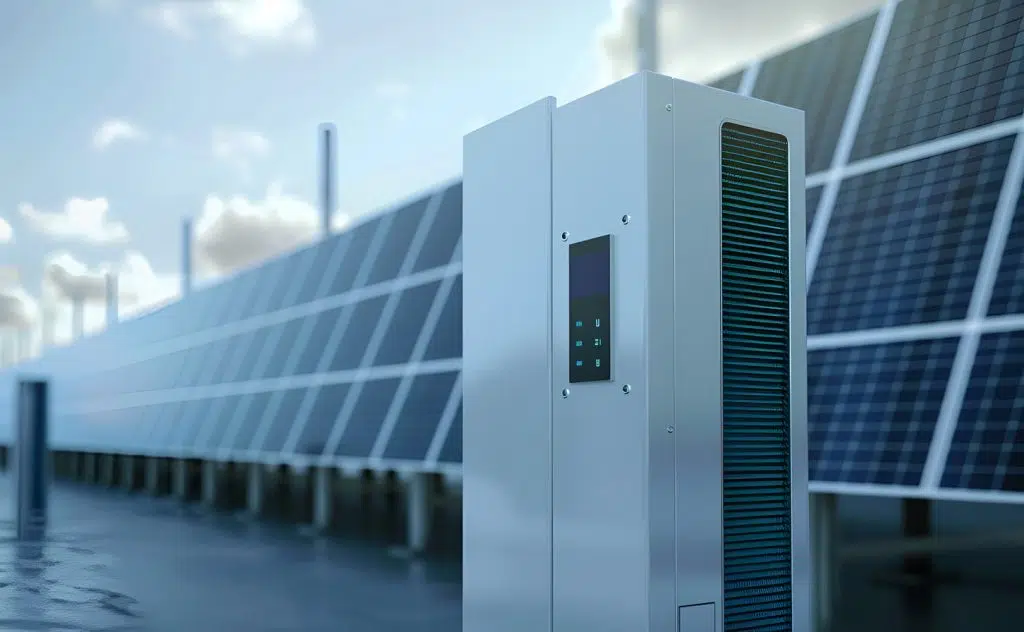 Falling battery costs, commercial energy storage systems, and long-term energy costs savings have pushed energy storage into the center of commercial resilience strategies. Instead of sizing a generator for peak load and letting it sit idle, businesses can deploy battery systems to handle daily grid disturbances, short outages, and peak-demand events. The generator becomes secondary; there for rare, extended emergencies, not routine operations.
Commercial Hybrid Inverters Changed Commercial Business System Design
Modern commercial hybrid inverters allow batteries, solar, grid power, and generators to operate as a coordinated system rather than isolated components. Batteries respond instantly during grid-down events where a generator needs to ramp up. The result is fewer starts, less wear, lower emissions, and dramatically improved reliability. The battery storage is now the starting quarterback; the generator is the emergency backup, not the entire offense.
Energy & Operational Resilience Become A Primary Focus
In 2026, business resilience, operational resilience, is measured by uptime, controllability, and predictability. Not by how many kilowatts a generator can theoretically produce. Battery energy storage will replace generators as systems that excel at frequency regulation, voltage support, and seamless transitions. While generators struggle with cold starts, maintenance failures, and fuel constraints. Businesses increasingly design for what actually happens on the grid, not worst-case hypotheticals.
The Business Owner Lens Has Shifted
Owners aren’t asking, “How big does my generator need to be?” They’re asking, “How do I stay operational when everything else breaks?” That mindset prioritizes assets that are always available, silent, emissions-free, and independent of external deliveries. Batteries meet that need. Generators don’t. This shift mirrors changes seen in other infrastructure domains.
Just as data centers moved from tape backups to live redundancy, energy systems are moving away from dormant equipment toward continuously active, intelligent assets. Commercial battery energy storage earns it keep every day: through peak shaving, demand charge reduction, and power quality improvements. Generators? Wait and hope.
It’s Generator Replacement. Not Elimination.
This is not an argument for eliminating generators entirely. It is an argument for redefining their role. In a battery-first energy storage system generators:
- Run fewer hours and face less regulatory exposure
- They last longer because they are used only when truly necessary
- Drive better business compliance, sustainability, and less operational risk
For business owners entering 2026, the message is clear: dependence on fuel deliveries is no longer an acceptable resilience strategy. Control, flexibility, and autonomy are. Generator-first thinking belongs to the past; battery-first systems define the future.
Works Cited
Environmental Protection Agency. Stationary Reciprocating Internal Combustion Engines (RICE). EPA, www.epa.gov.
National Fire Protection Association. NFPA 855: Standard for the Installation of Stationary Energy Storage Systems. NFPA, www.nfpa.org.
U.S. Department of Energy. Battery Energy Storage Overview. DOE, www.energy.gov.