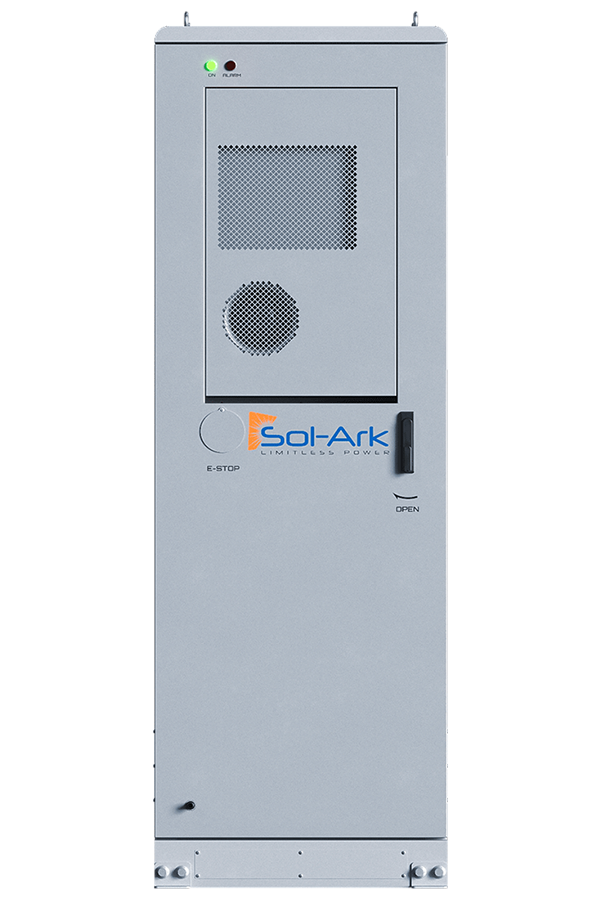
Commercial energy storage, built for the outdoors
The Sol-Ark L3 Series Lithium HVR delivers scalable high-voltage energy storage for outdoor commercial installations, giving businesses and system designers greater flexibility in where storage can be deployed. Built on Lithium Iron Phosphate (LFP) chemistry and designed to pair with compatible Sol-Ark commercial hybrid inverters, the HVR supports backup power, peak demand management, time-of-use optimization, and greater use of onsite solar.
Its outdoor-ready enclosure, modular architecture, and integrated battery management provide a flexible foundation for commercial energy systems that need to perform reliably across a wide range of sites and applications.
Scale storage around your project
Start with the capacity your project requires and expand as your facility, load profile, or runtime needs evolve. The L3 HVR-60 supports configurations of up to six battery units per compatible Sol-Ark commercial hybrid inverter, providing approximately 369 kWh of energy storage per inverter. Larger systems can scale further by adding additional hybrid inverters and battery capacity, giving system designers flexibility to size storage and power conversion together around current application requirements and future expansion.
Key Specifications
- 30K-3P-208V
- 60K-3P-480V
Built around the way your business uses energy
The L3 HVR gives businesses the flexibility to store energy when it’s available and use it when it can provide the greatest operational or financial value. Use stored energy to support backup power, manage peak demand, shift consumption around utility rates, and capture more value from onsite solar, all within a scalable outdoor platform that can be configured around your facility and energy strategy.

One integrated commercial energy platform
Storage works best when it’s part of a complete energy system. Pair the L3 HVR with compatible Sol-Ark commercial hybrid inverters to bring battery storage, onsite solar, grid power, and compatible generators together through one coordinated energy platform. This gives businesses greater flexibility in how energy is generated, stored, and used across the facility, while creating a foundation that can adapt as energy requirements change.
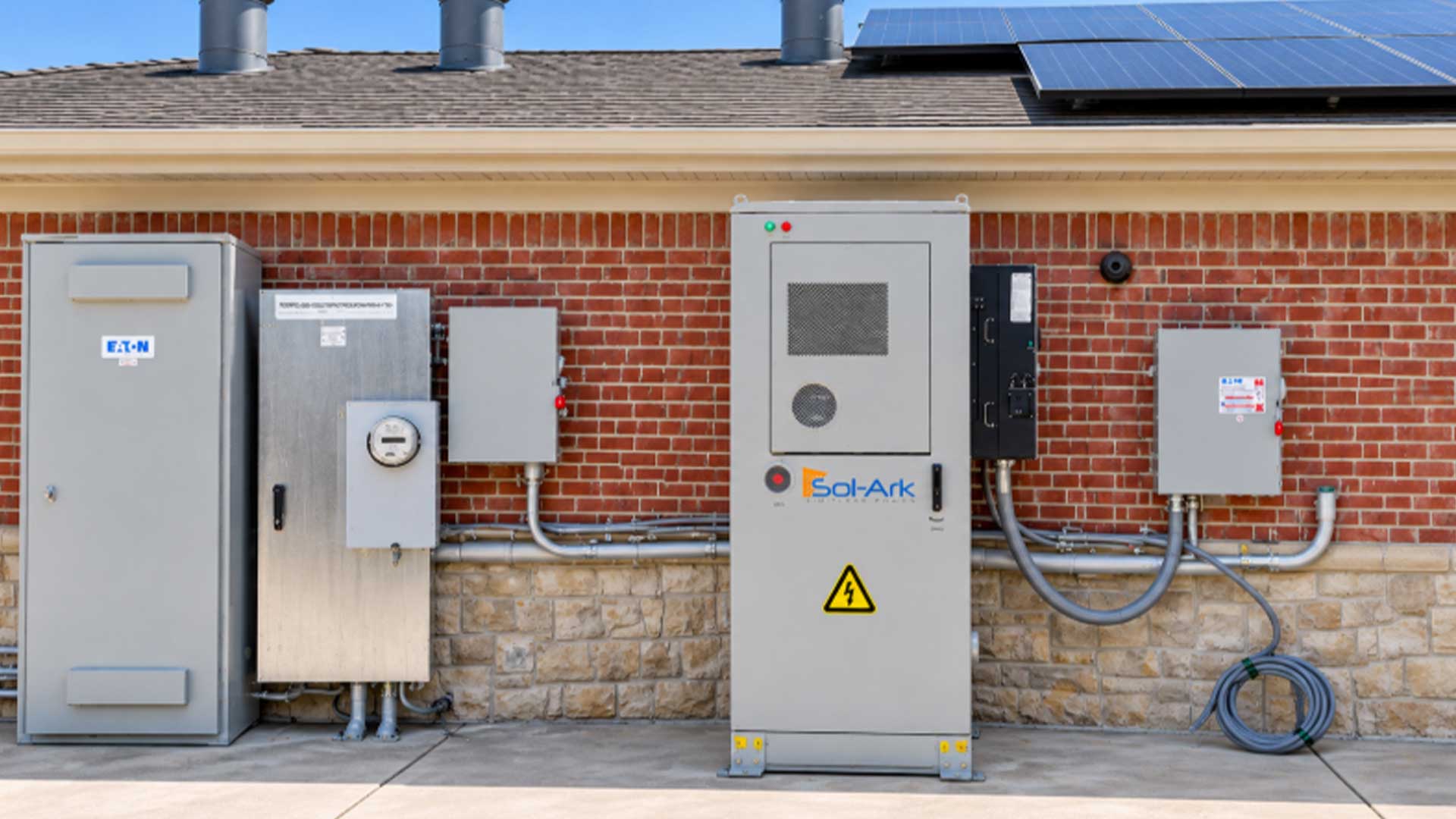
Built around LFP chemistry
The L3 HVR uses Lithium Iron Phosphate (LFP) battery chemistry, a widely used chemistry for stationary energy storage applications. Combined with integrated battery management, the system is designed to provide a dependable foundation for commercial projects where energy storage may be used day after day.
Designed for outdoor commercial installations
The L3 HVR is purpose-built for outdoor commercial energy storage, giving businesses and system designers greater flexibility in where storage can be deployed across a property.
Its IP55-rated enclosure helps protect the system from outdoor environmental conditions while maintaining practical access for installation, operation, and service. That opens more options for incorporating storage around commercial buildings, warehouses, manufacturing facilities, campuses, agricultural operations, and other energy-intensive sites where dedicated indoor battery space may be limited or unavailable.
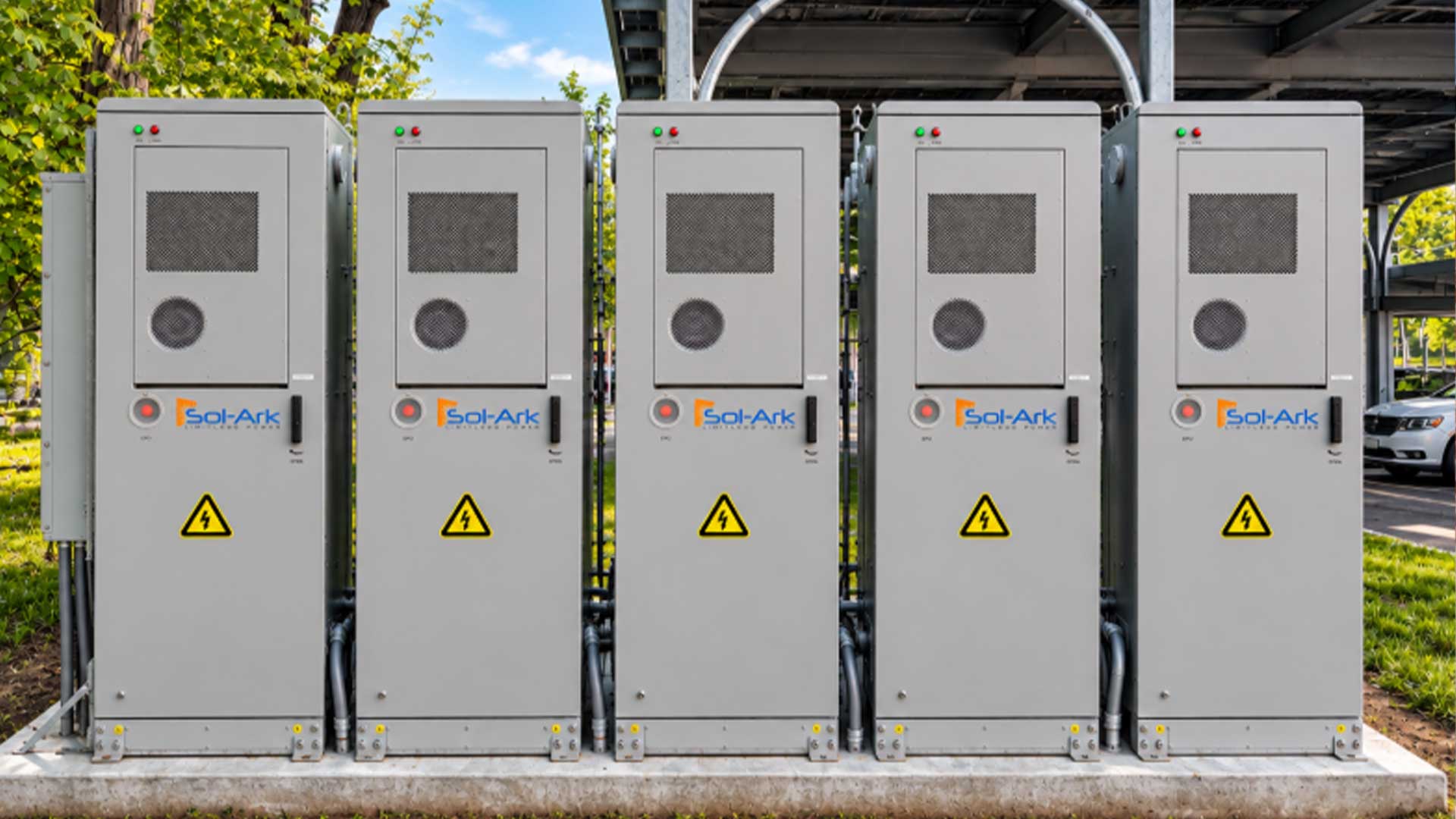
Built for safety. Designed for confidence.
The L3 HV family uses Lithium Iron Phosphate (LFP) chemistry, valued for its thermal stability and suitability for stationary energy storage applications. Integrated battery management continuously monitors system conditions to help support safe, reliable operation throughout the life of the system. L3 Series battery systems are also supported by rigorous safety certification and testing, including UL 1973, UL 9540, UL 9540A, and UN 38.3 requirements, providing added assurance for system designers, installers, and facility owners.
From storage to a complete energy system
Pair L3 HV energy storage with Sol-Ark commercial hybrid inverters and MySolArk monitoring to create a more coordinated commercial energy system. Bringing your battery, inverter, monitoring, and energy management together within one ecosystem helps simplify system design and commissioning while improving visibility, control, and long-term operation across your facility.