




The mission was simple but ambitious: bring high-quality healthcare to underserved and disaster-struck regions around the world, using rugged, mobile clinics that could go wherever they were needed most.
In the aftermath of the 2010 earthquake in Haiti, a nonprofit known then as Hospitals of Hope converted shipping containers into mobile medical units to deliver critical healthcare in devastated areas. Clinic in a Can was born.
These container-based clinics were initially powered by diesel generators, which posed significant challenges:
For a team focused on efficiency and global outreach, these limitations quickly became barriers to scale.
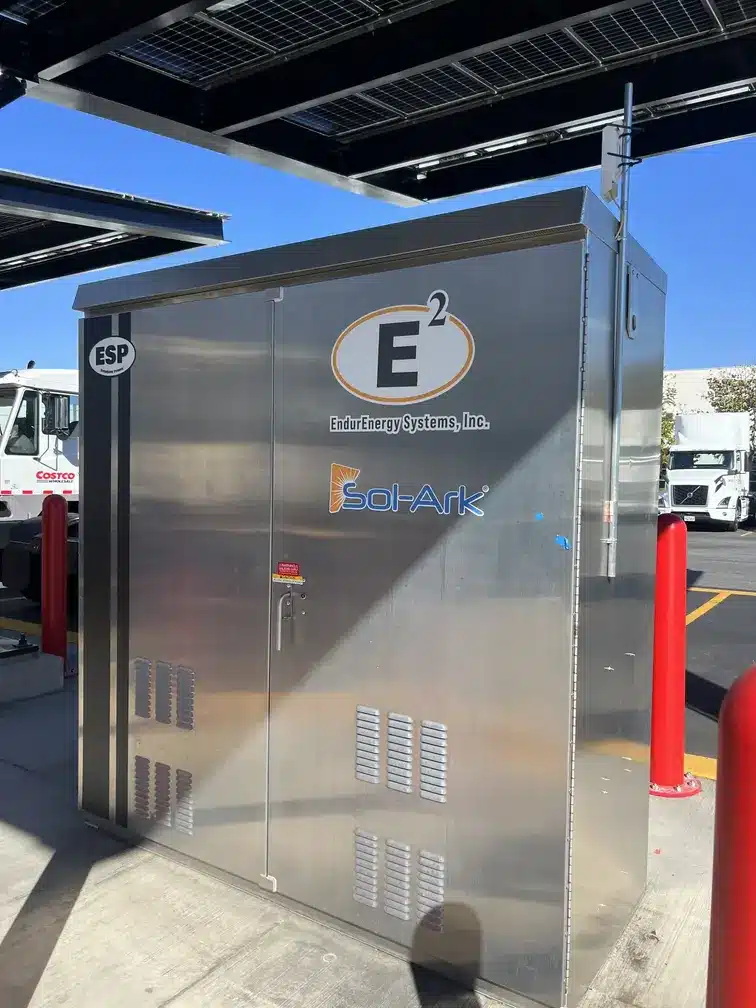
SOLAR ARRAY: Conex-mounted solar (PV)
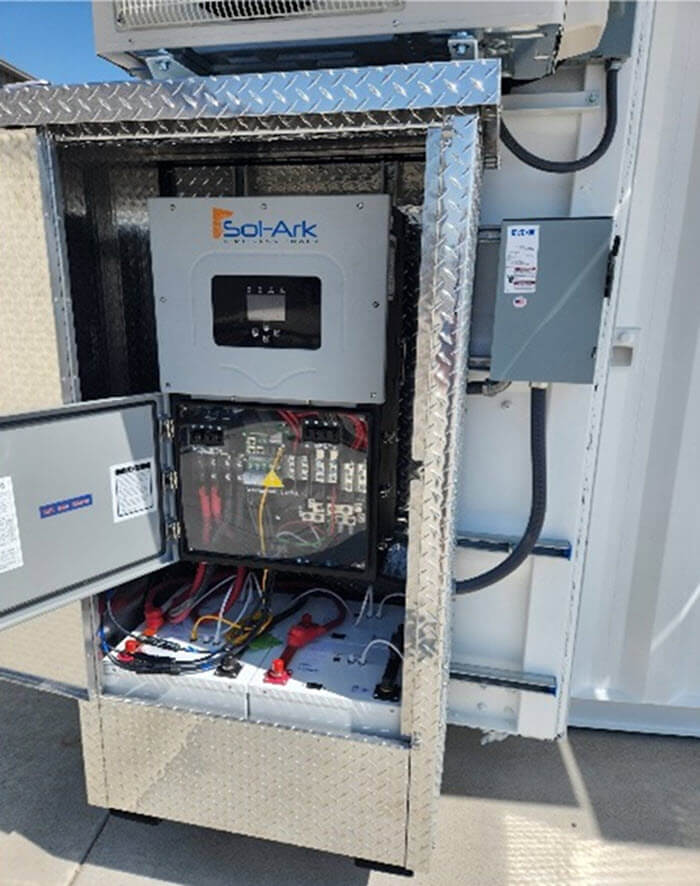
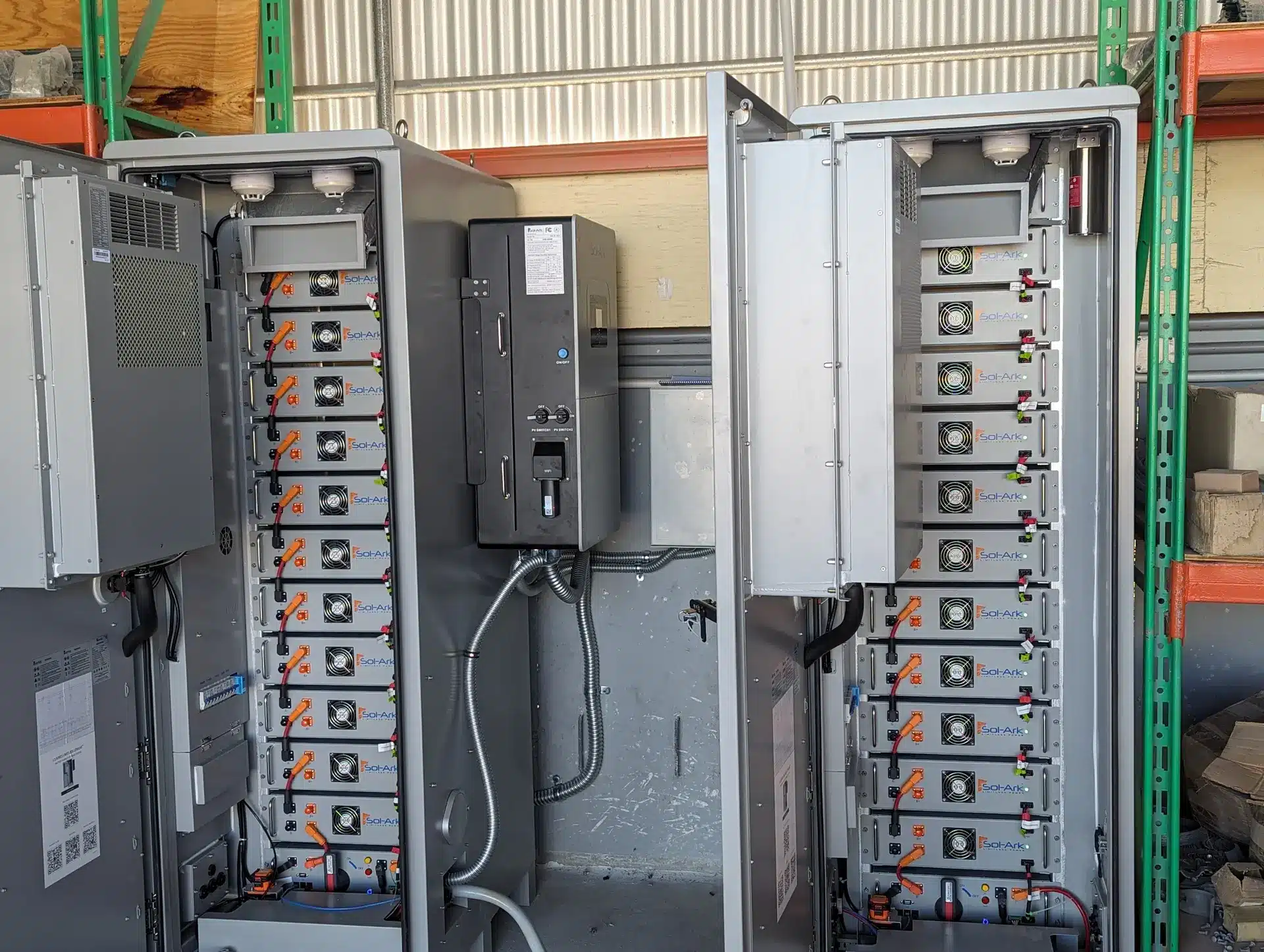
HYBRID INVERTER STACK: [1] Sol-Ark® 15K-2P or 12K-2P Residential Hybrid Inverter
IMPLEMENTATION & INTEGRATION
Sol-Ark® hybrid inverters provided 2X – 3X more power than the clinics typically required, offering a generous margin for medical equipment, lighting, refrigeration, and climate control.
The intuitive hybrid inverter touchscreen interface made the energy management systems approachable for clinicians who weren’t solar technicians. And its durability meant fewer field service calls, especially critical for clinics stationed in remote or disaster-prone areas.
“The ‘aha moment’ came when we realized how simple the Sol-Ark systems were to install and operate. It just worked – no complex configurations, no extra equipment. That kind of simplicity is critical in the field.”
DIESEL GENERATOR
~$56,000/YEAR
MEDIUM: 200 HOURS
OF GENERATOR RUNTIME
SCARCE; DIFFICULT TO OBTAIN
HIGH DECIBELS & CO2 EMISSIONS
SOLAR + BATTERY STORAGE
NONE – $0
99% UPTIME WITH NON-GRID RENEWABLE ENERGY
ABUNDANT
LOW DECIBELS & NO EMISSIONS
The results were significant. Over the next five years, Clinic in a Can will save over $180K in diesel fuel and energy costs. By outfitting one (1) of their conex containers with solar, they were able to save ~$56K in fuel.
Sol-Ark improved their uptime, reduced generator noise pollution, and mobile units became easier to deploy and maintain.
Sol-Ark’s hybrid inverter flexibility allowed them to tailor each deployment without needing unique equipment for every region.