
Turning Commercial Solar Project Delays Into An hidden Advantage
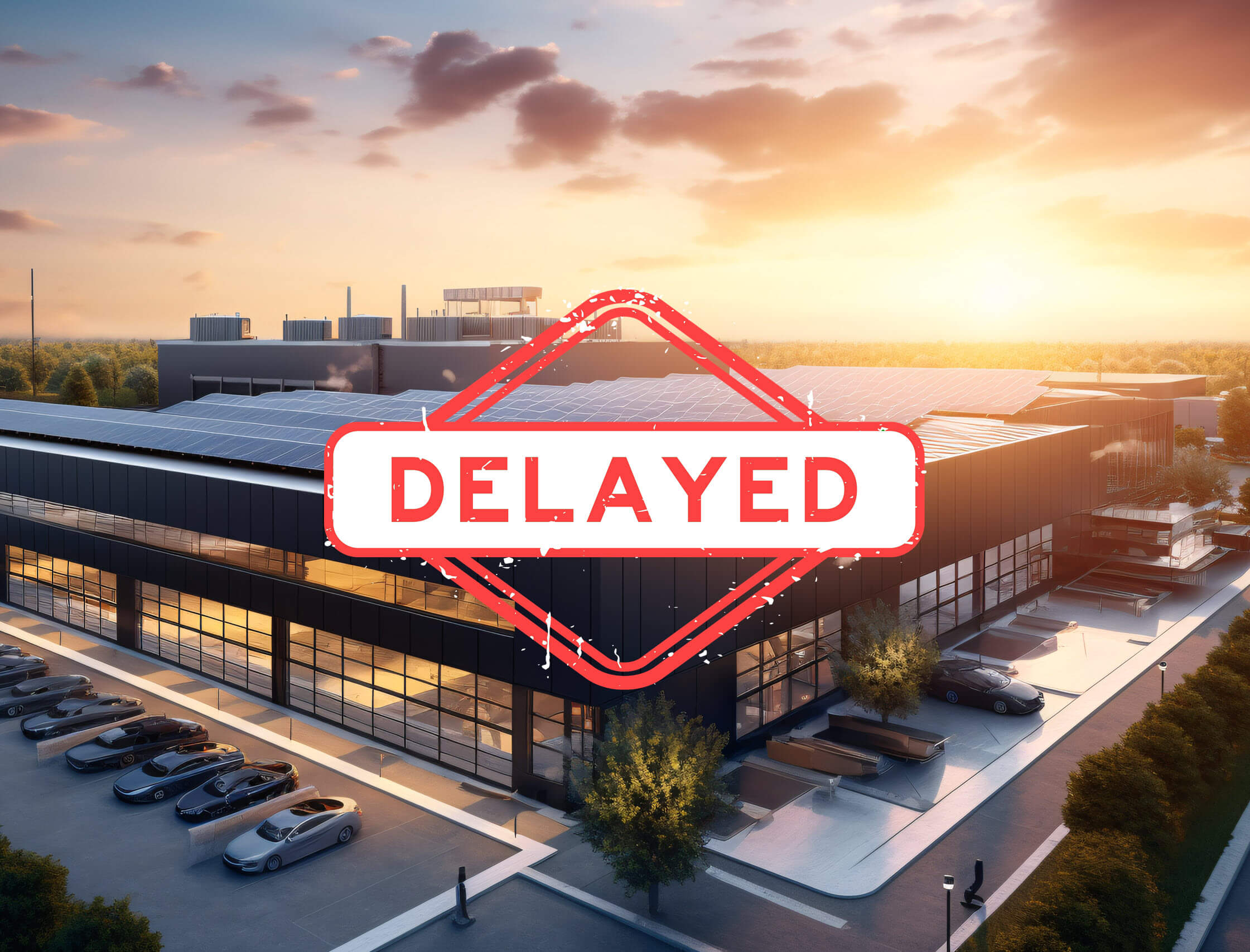
It happens the same way every time. A building owner is ready. The numbers work. The project makes sense until the utility connection timeline shows up. 18 months. Maybe 36. Suddenly, the conversation shifts from momentum to hesitation.
What the owner hears: DELAY. CAPITAL RISK. LOST SAVINGS.
A strong commercial installer hears something else entirely: queue position, study risk, export limits, redesign paths. Not a dead deal, just a different one. That distinction is where commercial projects are either won or lost. And, for residential installers transitioning to commercial projects, knowing how to navigate this topic will be critical.
What Grid/Utility interconnection Really means
Interconnection is not a business concept. It is a technical and procedural filter. Utilities use it to determine whether a system can safely connect to the grid, what upgrades might be required, and how long that process will take. And right now, that process is under strain. According to Lawrence Berkeley National Laboratory,
More than 10,000 projects representing over 1,400 GW of generation and 890 GW of storage are waiting in U.S. interconnection queues (Berkeley Lab).
Timelines have stretched from under two years to more than four years in some regions. For commercial installers, this is not theoretical. It is showing up in real conversations, with real customers, right now. The grid isn’t an open highway. It’s an on-ramp during rush hour. And most projects are waiting for a green light that may not come anytime soon.
Why Commercial Projects Stall Out. And why owners walk
Building owners don’t think in terms of feeder constraints or hosting capacity. They think in timelines and outcomes. So when they hear: “This may take two to three years to interconnect,” what they often interpret is:
- “This project isn’t real yet.”
- “The ROI is uncertain.”
- “We should wait.”
Or worse, they pivot to alternatives like generators that feel more immediate, even if they are less efficient long-term. The installer who simply delivers that message becomes a messenger of delay. The installer who reframes it becomes a strategic partner.
The installer advantage: repositioning the deal
Interconnection constraints don’t kill projects (in a lot of cases). Lack of adaptability does. The commercial installers who consistently win in this environment do four things differently:
1) They translate utility complexity early
They set expectations before the utility does to explain timelines, risks, and options in plain language.
2) They reduce friction before submission
Clean applications, well-defined system behavior, and thoughtful design reduce avoidable delays.
3) They redesign around what can be done now
Instead of waiting for full export approval, they focus on immediate value: self-consumption, resilience, and demand reduction.
4) They present alternatives. Not apologies
They don’t bring dead ends. They bring pathways. This is where system design becomes the difference.
Rethinking the Energy storage system: beyond export-first solar

For years, many commercial projects were built around one core assumption: generate power and export excess to the grid. That no longer holds in many markets. Today, the more resilient strategy is to design systems that prioritize on-site value first, and treat grid export as optional. This is where hybrid system architecture starts to matter.
Commercial hybrid inverters, like the Sol-Ark® 30K-3P-208V and Sol-Ark® 60K-3P-480V, allow commercial installers to control how energy flows between solar, storage, the building, and the grid. That control opens up new ways to keep projects moving, even when interconnection is uncertain. Not as a workaround. As a strategy.
What repositioning looks like in practice
The shift is subtle, but powerful. Instead of asking, “When can we interconnect?”, the better question becomes: “What value can we deliver now, while the grid catches up?” Here’s how that plays out.
- Self-consumption-first systems: Rather than designing for export, installers prioritize using solar energy on-site. Energy flows first to building loads, reducing grid dependency immediately.
- Storage-led deployment: In some cases, projects can begin with battery storage and controls, delivering demand charge reduction and backup power while solar export approval is pending. The project starts generating value before it is fully built.
- Limited-export configurations: Where utility rules allow, systems can be designed to cap or eliminate export. This reduces strain on the grid and may simplify interconnection pathways.
- Phased buildouts: Instead of waiting for full system approval, installers deploy in stages with critical loads or infrastructure, then expanding as conditions allow.
The common thread is flexibility. Hybrid inverter platforms enable that flexibility by integrating solar, storage, and load management into a single controllable system. That makes it possible to adapt system behavior to match utility constraints instead of being blocked by them. The installer is no longer waiting on the grid. They are working around it with intentionality.
Reform is coming! But don’t wait for it.
Policy changes are underway. Federal Energy Regulatory Commission Order No. 2023 aims to streamline large-scale interconnection through cluster studies and stricter timelines. The U.S. Department of Energy is pushing for faster, more automated DER interconnection processes. But, as we all know, reform takes time. And results will vary by region.
Installers who build their business assuming interconnection will remain slow will be better positioned than those waiting for the system to fix itself.
A PRACTICAL CHECKLIST FOR INSTALLERS
- Screen interconnection risk before finalizing project economics
- Learn each utility’s process, timelines, and study triggers
- Design systems with flexible architectures (non-export, storage-first, phased)
- Lead with outcomes: resilience, cost control, operational continuity
- Present multiple pathways—not a single point of failure
MAKING SOLAR PROJECT DELAYS YOUR ADVANTAGE
Interconnection is no longer just an engineering step. It is part of the sales conversation. In a constrained grid environment, the installer who can translate delay into direction becomes more valuable, not less. Because while most firms are waiting for permission, the best ones are already delivering results. And in this market, the ability to say “we can still move forward” is what separates the projects that stall from the ones that close.
Works Cited
Berkeley Lab. Queued Up: 2025 Edition—Characteristics of Power Plants Seeking Transmission Interconnection. Lawrence Berkeley National Laboratory, 2025
Federal Energy Regulatory Commission. Interconnection Final Rule (Order No. 2023), 2023, https://www.ferc.gov
U.S. Department of Energy. Distributed Energy Resource Interconnection Roadmap, 2025, https://www.energy.gov